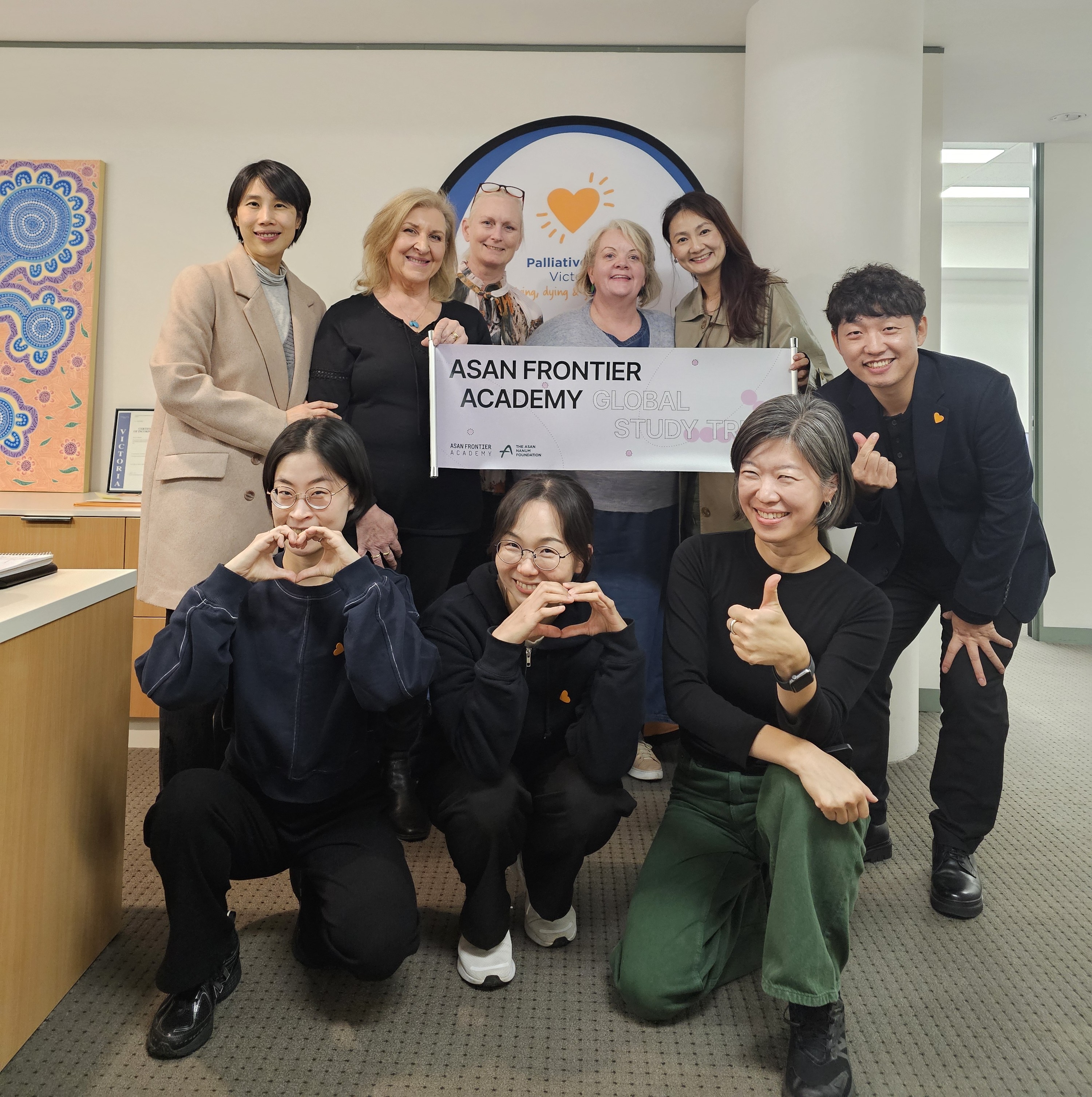
This week PCV welcomed a delegation from Korea, Death Literacy Connect, for an exchange of ideas about death literacy, community engagement and approaches to supporting people to better understand death, dying and end-of-life care.
Death Literacy Connect is a group of professionals working towards establishing a non-profit organisation in Korea, with a vision to raise awareness of death literacy and encourage more open and informed conversations about death, dying and grief. The group was joined by Dr Sora Lee, from La Trobe University’s Public Health Palliative Care Unit, who has been instrumental in facilitating the visit to Australia.
Why death literacy, and why now?
For Death Literacy Connect, the need for this work is particularly pressing as Korea experiences significant demographic change. In 2025, people aged 65 and over made up more than 20 per cent of the population, placing Korea among the world’s most aged societies.
At the same time, there is a gap between the growing prevalence of death and dying and people's preparedness to talk about it or plan for the end of life. According to information shared by Death Literacy Connect, only 18.7 per cent of people aged 65 and over have an advance directive, while 54.3 per cent of adults have never talked about death with their family.
For Death Literacy Connect, these figures point to a broader challenge: while death is increasingly part of everyday life, many people may not have the language, knowledge or social confidence to navigate conversations about it.
Their work aims to help build what they describe as the “social muscle” to face death, creating opportunities for people to engage with death and dying before they are confronted with a crisis.
Sharing knowledge and experiences
During the meeting, PCV shared its experience developing community resources and initiatives that help people understand palliative care and navigate conversations around death and dying.
The delegation was interested in PCV’s community-focused approach, including the importance of making information accessible and creating opportunities for people to build knowledge before they or someone close to them needs end-of-life care.
Death Literacy Connect also shared their vision for bringing death literacy into the broader Korean community. Their approach seeks to create opportunities for people to consider death as a natural part of life, rather than something that is only discussed when it becomes an immediate concern.
Learning across cultures
Although Australia and Korea have different social and cultural contexts, the discussion revealed many shared challenges.
How can we make death and dying easier to talk about? How can people access reliable information and understand their options? And how can cultural values, personal wishes and the needs of families be respected at the end of life?
PCV looks forward to following the Team's progress as they work towards establishing their organisation in Korea and continuing this international exchange of ideas and experience.
Photograph:
Front row L-R: Shin Gi-na (Paradise Cultural Foundation), Kim Young-a (Dadareuda), Shin Ave (The Beautiful Foundation)
Back row L-R: Dr Sora Lee (La Trobe University), Tonina Gucciardo-Masci (PCV), Chris Wishart (PCV), Amy Noble (PCV), Yun Eun-nam (Giving Plus Foundation), Song Jun-hyeok (Haesol Vocational Academy)
Missing from photo: Song Da-hye (GPTers Community)
Article by Tonina Gucciardo-Masci, Community Engagement Manager